
Be sure to read Part I of this post, Pushing and Beyond | Tips for the 2nd Stage of Labor, by clicking here.
The Birth of the Placenta | Third Stage
After the birth of the baby, others will be more interested in looking at the baby, taking pictures of the family, and oohing and aahing over the sweet new addition. However, as a doula, our job is to continue to tend to the mother. Even when you step away to give mom and her SO a chance to have their moment together, never stop observing and responding to the mother’s needs.
At this stage, the mother may begin to have strong contractions again (depending on if she’s a multip or primip the strength of those contractions may vary). As she begins to feel those contractions, come back to her side and help her through the birth of her placenta.
Again, stand close to mom and encourage her through it. It’s also good to keep an eye on the OB/Midwife and watch for their cues and try to follow any leads they provide about what they want mom to do (of course this is something you should be doing throughout the birth, to begin with).
When the placenta is birthed, if mom is planning on taking it home with her, you’ll need to help make sure that happens.
Also, keep in mind that the nurse or Dr./Midwife will begin to massage the mother’s uterus to help it clamp down. This is painful, and you’ll want to assist mom through this. I often will tell mothers to push out the pain with their breath, and I’ll keep my eye contact strong with mom as the procedure takes place.
In Case of Hemorrhage
I’ve also had some moms hemorrhage at that stage, which is another reason to stay close and keep an eye on mom’s color, all the while, quietly making note of her blood pressure shown on the monitor. (Just for observational purposes only, it helps you get a sense of how stable the mother is.) Also, notice when the nurses come to check on mom’s bleeding – listen for their comments and watch their actions. You’ll get a good sense of how mom is doing based on the nurses energy in the room.
Should mom hemorrhage, go directly to her side and be the calming presence for her and her SO. You can talk her through the events that are taking place and remind her that she’s in good hands.
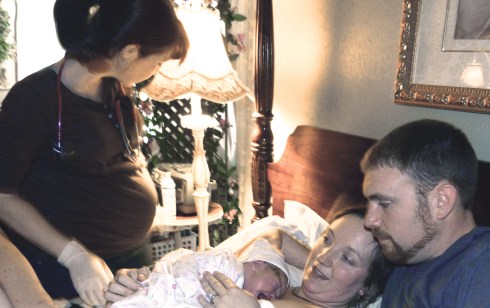
My experience as a CNM’s assistant taught me valuable lessons on keeping a watchful eye on the mother after she’s given birth. Here I am, 8 months pregnant, working at Inanna Birth Center.
Keeping a Watchful Eye on the Mother During a Repair and Recovery
Also, after the birth of the placenta the OB or Midwife will inspect the mother’s bottom for any repair needs. Stay close and present with the mother for this time. Keep her feeling safe and secure and do anything you can to help her feel calm and peaceful. Talk her through the stages of the repair.
Be sure that if the mother birthed without an epidural that the Dr. or Midwife remembers the lidocaine (just observe, don’t pipe up unless absolutely necessary). Tell mom she’ll feel a “prick and burn” with the application of the lidocaine and to breath through the procedure and to help make sure she can see her baby during the repair as a way to cope through the procedure.
Further Thoughts and a Breastfeeding Tip
Is the mother cold? Find a warm blanket for her. Does she have any sweaty clothes on? Remove them for her. Is the mother thirsty? Ask if you can get her some juice. Tell the mother what a star she is and how proud you are of her. Then assist with getting baby skin-to-skin and breastfeeding with-in the first hour.
If mom has had lots of IV fluids her nipples may be flat as a result and a breast shell (not a breast shield) will be quite useful in helping to push back the fluids and push out her nipple. Ask if there is an IBCLC on staff who can assist mom with a shell if necessary.
Doulas and Baby Holding
Don’t expect to hold the baby. As a doula, we are often the last people who should be holding the baby. And sometimes this is a point of contention for any extended family who are there, and may notice if a “stranger” held the baby before they did. You may not ever hold the baby and that’s okay, because our job is to help hold the mother (emotionally and physically).
When Leaving
I make it a point to never leave my client until I can see that baby has clearly latched on, without my help, and baby is feeding well. I also never leave until I know that mom’s bleeding is considered stable and normal – you can confirm this with the nurse if you can’t tell from observation.
I make sure that mom knows that if she needs Ibuprofen to ask for it ASAP- especially if she’s had a repair. I also like to make sure that mom has a meal on the way or is already eating. Plus, I want to be sure the mother has an ice pack on her bottom if needed, before I leave. Please keep in mind there are very gentle and respectful ways to ask for these things without coming across as demanding or intrusive.
Before heading out the door, I double check to make sure that I haven’t left anything in the room. Then I make sure the the SO has my phone number should they need to call me and I remind them that I am still on-call for them at any moments need. I thank the nurses for all their inspiring work. I congratulate everyone that is present, and I thank the new family for the honor of assisting with their birth.
Tags: 3rd stage of labor, childbirth, Doula Tips, Placenta


 The Joy of This